

Devotional benches, confessional booths,
mercy seats and altars

Fundraising tables
Limited Availability - Impression Number: PP 1/1
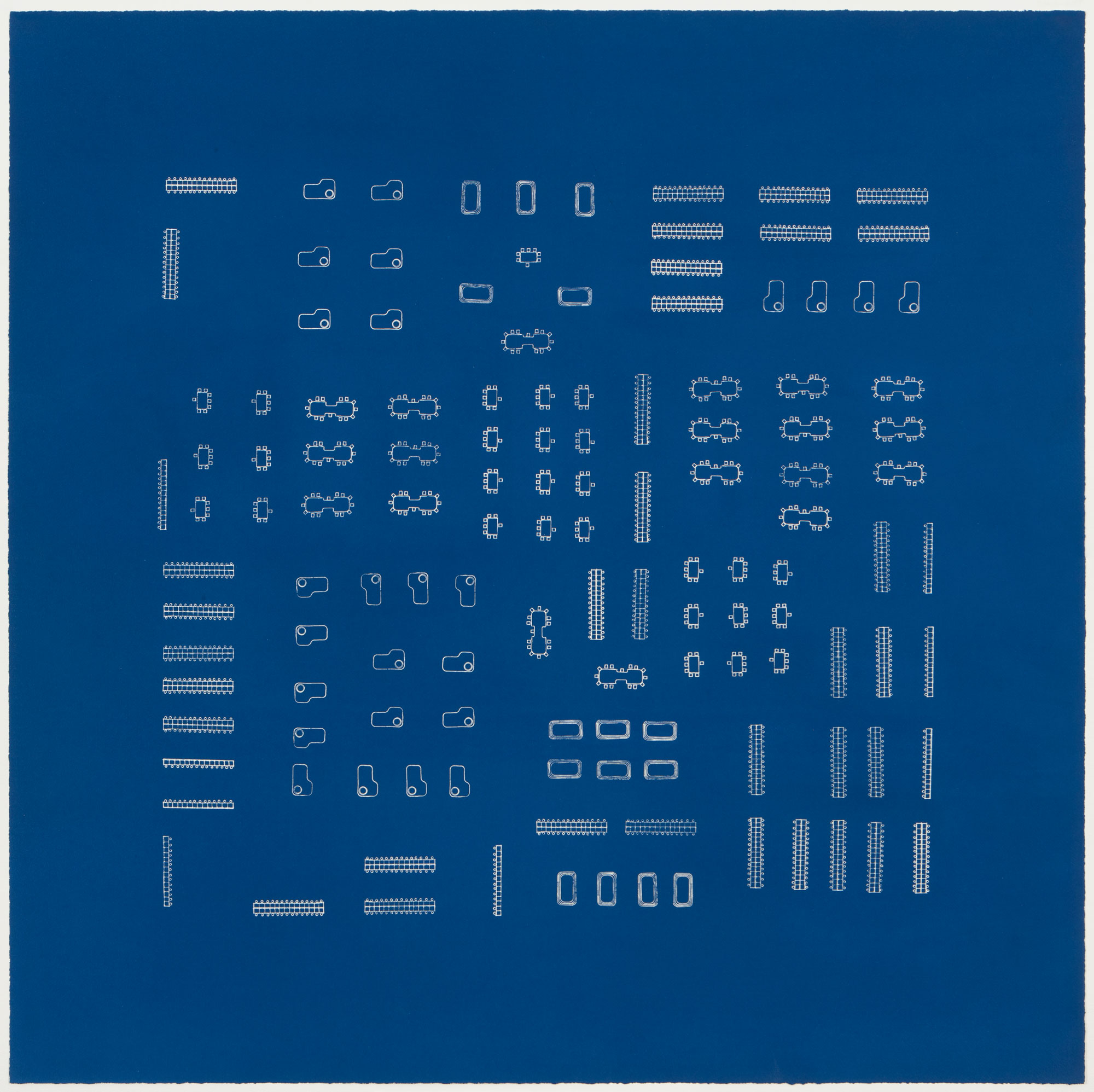
Gambling tables
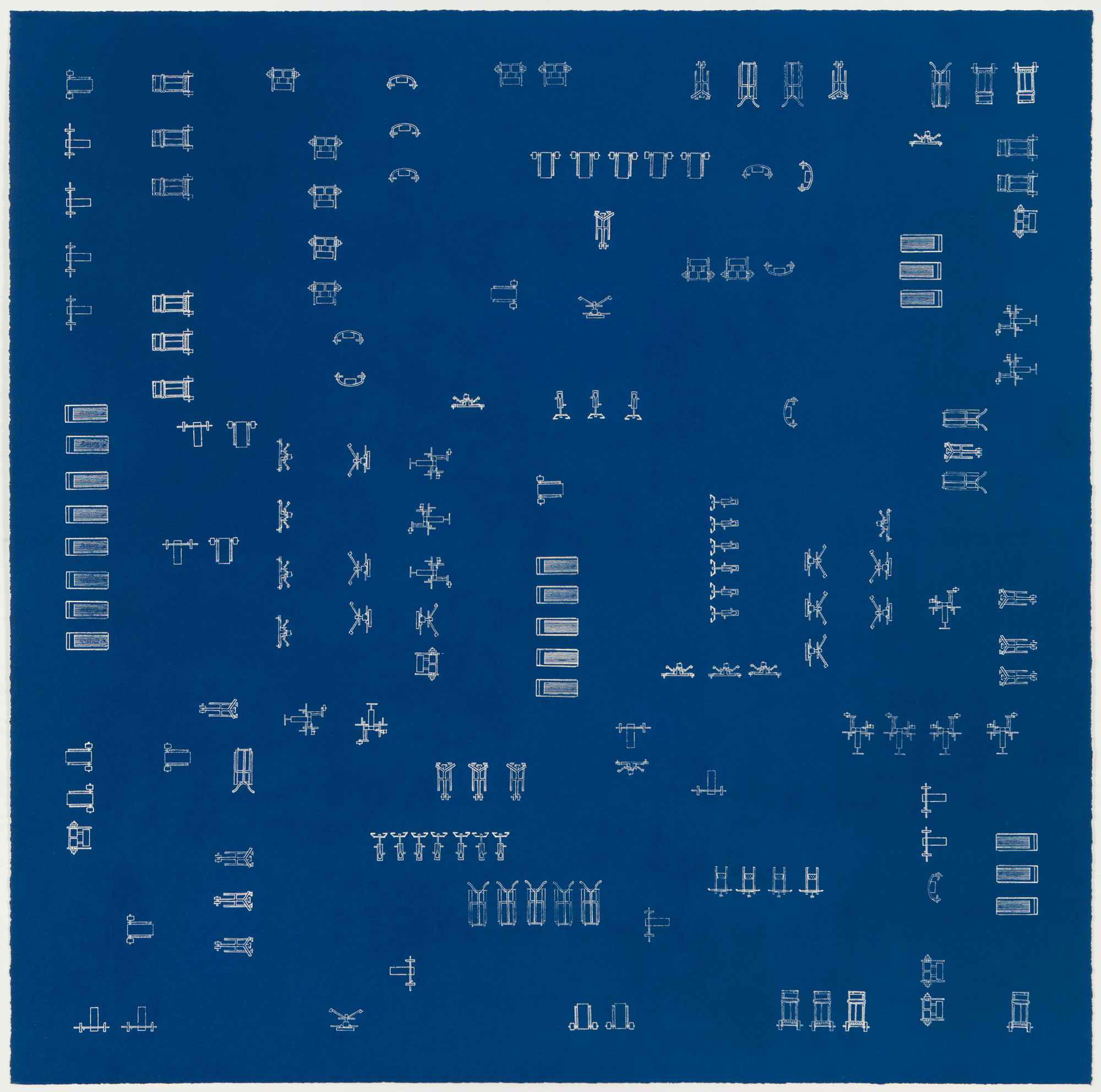
Workout machines - No longer available.

Peep show and video booths
Limited Availability - Impression Number: PP 1/1
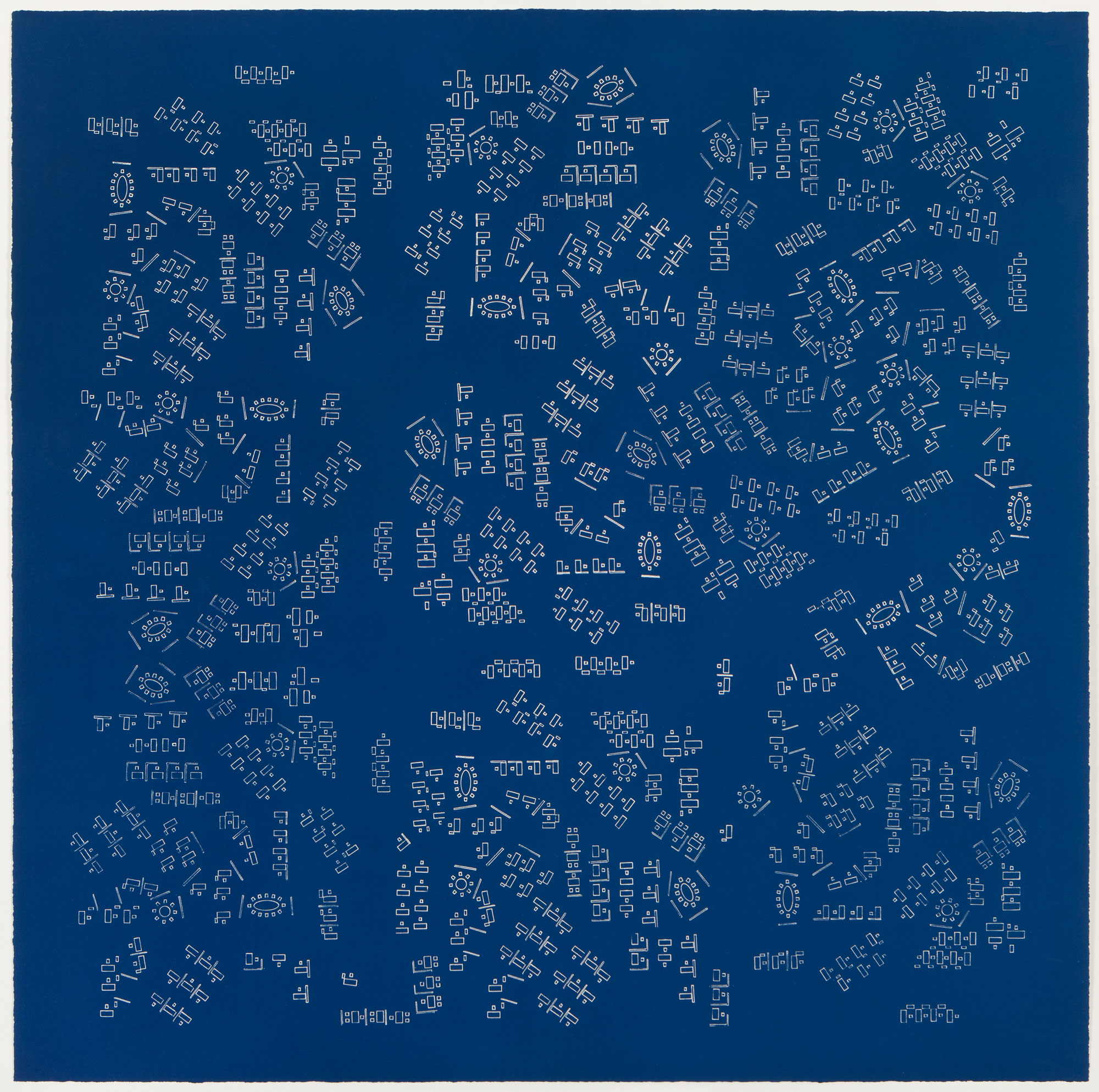
Work stations
Limited Availability - Impression Number: PP 1/1
Guillermo Kuitca
The Neufert Suite
2002
Suite of six cyanotypes
46-1/2 x 46-1/2 inches
Edition: 9
Individual print - $4,000.
Suite of six prints - No Longer Available
Inquire now - gsoffice@usf.edu
.jpg)
.jpg)
Guillermo Kuitca
L'Encyclopedie (Marble flooring plan and ceiling plan of a Salon in the Palace of the Marquis de Spinola)
2002
Lithograph
Diptych: each 51-1/2 x 40 inches
Edition: XLV; 20
Sold only as diptych - $6,000.
Inquire now - gsoffice@usf.edu
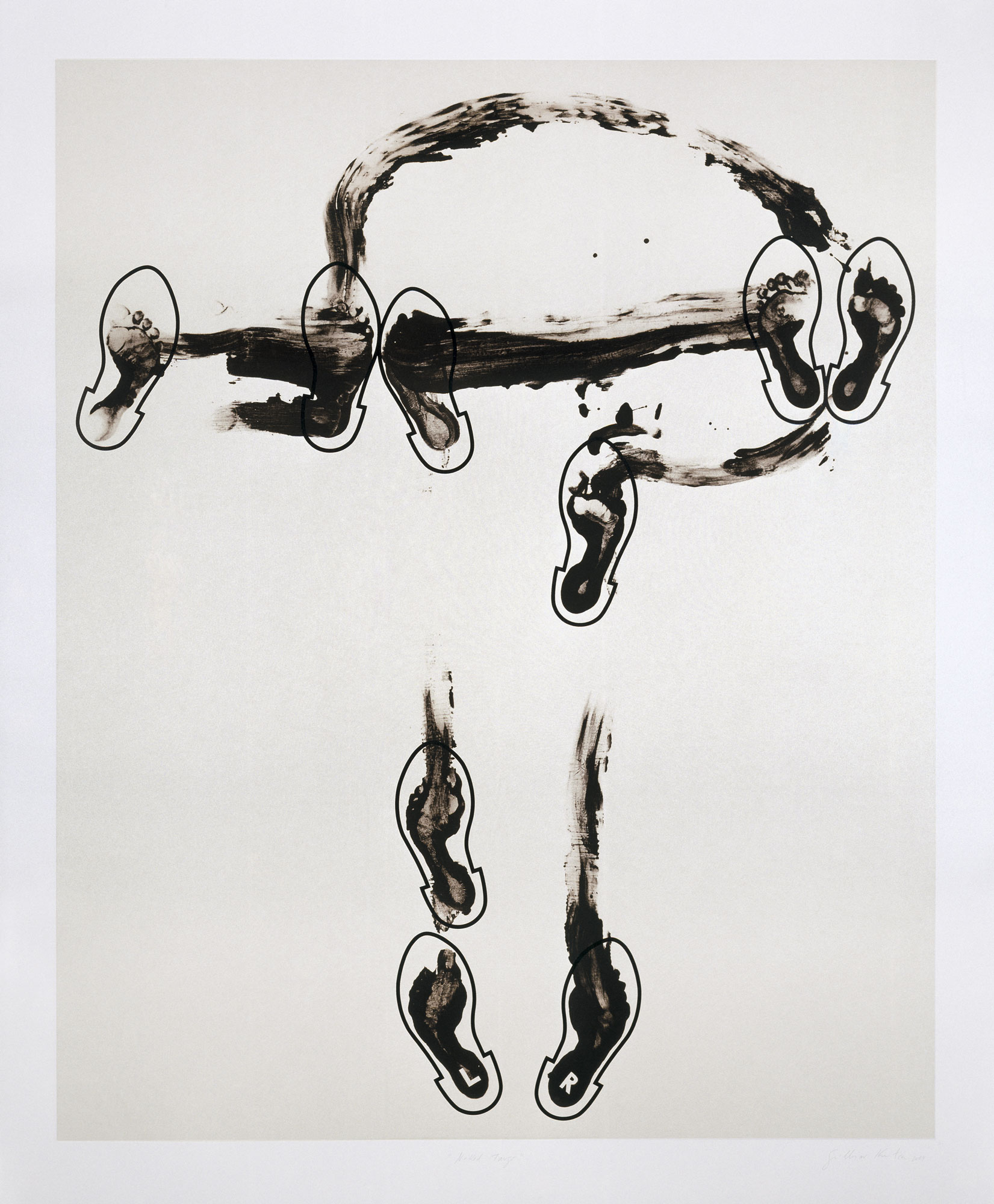
Guillermo Kuitca
Naked Tango
2004
Photogravure and screenprint on paper collé
57-3/4 x 47-3/8 inches
Edition: 20
No Longer Available
Guillermo Kuitca
Guillermo Kuitca, born in Buenos Aires, Argentina in 1961, began painting as a young child and had his first one-person show at the age of 13. Kuitca addresses the relationship between people and spaces, and "the human need to impose order on the spaces we occupy" (Eleanor Heartney, ARTnews). His spaces are empty of people and frozen in time, except for his painterly markings that serve to manipulate the images and mark the passing presence of inhabitants.
With the exhibition of a series of maps, often painted on beds, his work began to receive serious international attention in the late 1980s. He has shown at the Museum of Modern Art in New York, the Corcoran Gallery of Art in Washington, D.C., Documenta IX in Kassel, and in museums and galleries in Spain, England, Italy, Canada, Mexico, Venezuela and Brazil.
In addition to maps, other frequent themes include city grids, apartment floor plans, theatre spaces, and abstract designs for conducting the activities and rituals of everyday life.
Naked Tango
In the photogravure print Naked Tango, Kuitca pays homage to Andy Warhol's dance step paintings, which were simple copies of diagrams created for teaching popular dance forms in mid-century America. By taking such a diagram for dancing the tango-Argentina's exotic, sensual and politically charged national dance-and tracing the imprints of a dancer's bare feet in movement, Kuitca confronts the ideal with the real, transforming Warhol's neat, almost clinical design with the disorder of actual experience. The sensitive photogravure process captures the inflections of pressure, speed and direction of the dancer's movements, imparting a calligraphic presence on the print.
Naked Tango was created by Kuitca and published by Graphicstudio in support of the Aid for AIDS Project.
L'Encyclopedie
In the lithographic diptych, L'Encyclopedie (Marble flooring plan and ceiling plan of a Salon in the Palace of the Marquis de Spinola), architectural drawings of great houses are used for inspriation. The artist mines his materials from existent maps, plans and architectural drawings; those in L'Encyclopedie are derived from engravings in Diderot's 18th century L'Encyclopedie.
THE NEUFERT SUITE
In addition to maps, other frequent themes include city grids, apartment floor plans, theatre spaces, and, as in this suite of cyanotypes, abstract patterns designating the use of space for working, praying, working out and other activities, that Kuitca adapted from the architecturally-based Neufert designs. The medium of cyanotype, linked to architectural practice, is particularly appropriate for the project's theme, and the deep, textured blue tones lend both sensuality and spirituality to Kuitca's meditation on the conduction of our daily ritualistic activities. The cyanotype process was first used by Graphicstudio in 1972 with Robert Rauschenberg and revived with this suite with Kuitca.
Printmaking + Sculpture Terms
Sales
For sales, or more information about an edition, please contact Graphicstudio at (813) 974-3503 or gsoffice@usf.edu.
Copyright + Reproduction
Images of the artwork are jointly owned by the artist and Graphicstudio. Reproduction of any kind including electronic media must be expressly approved by Graphicstudio.